How Stress Affects Your Body and Mind (Health Effects Explained)
How Stress Affects Your Body and Mind
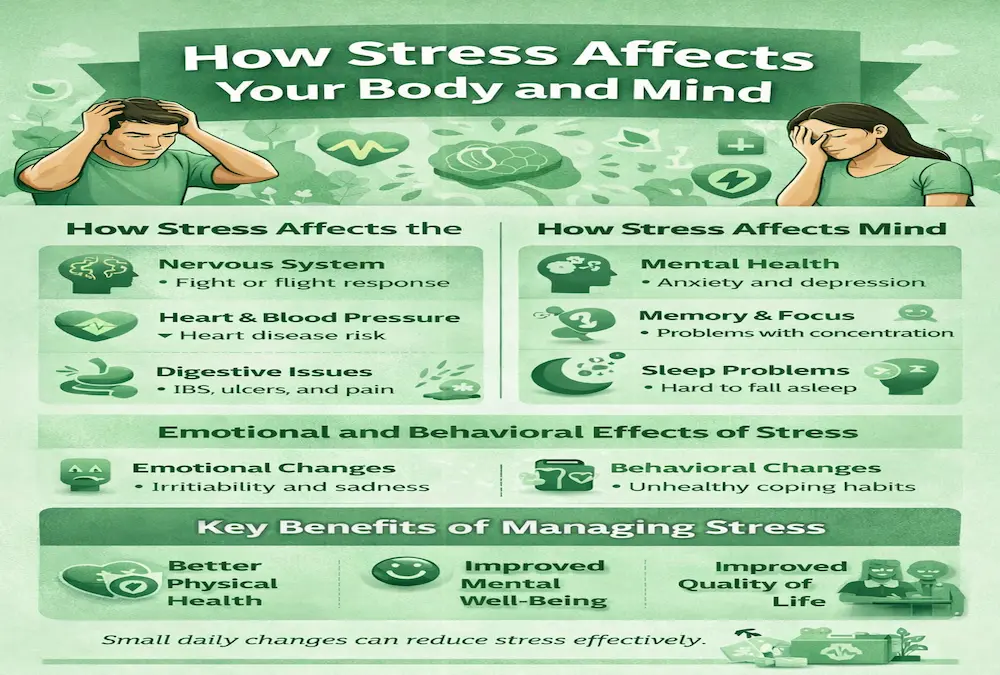
Stress is a normal part of everyday life. However, long-term or unmanaged stress can seriously affect both your body and mind.
Understanding how stress works helps you take better care of your physical health, mental well-being, and overall quality of life.
What Is Stress?
Understanding Stress Simply
Stress is your body’s natural response to challenges or pressure. It prepares you to react quickly in difficult situations.
Short-term stress can be helpful, but chronic stress can harm your health. The problem starts when stress never goes away.
Types of Stress
Not all stress is the same. Some stress is temporary, while other forms last for months or years.
- Acute stress – short-term and sudden
- Chronic stress – long-lasting and ongoing
- Emotional stress – linked to feelings and relationships
How Stress Affects the Body
Impact on the Nervous System
Stress activates the “fight or flight” response. Your body releases hormones like cortisol and adrenaline.
When this response stays active too long, it can exhaust your nervous system.
Effect on Heart and Blood Pressure
Stress increases heart rate and blood pressure. Over time, this raises the risk of heart disease.
People with chronic stress are more likely to develop hypertension.
Digestive Problems
Stress affects digestion by changing gut movement. It can cause stomach pain, bloating, or acid reflux.
Long-term stress may worsen conditions like IBS and ulcers.
Weakened Immune System
Chronic stress lowers immune response. This makes it easier to catch infections.
Healing and recovery also become slower under constant stress.
How Stress Affects the Mind
Impact on Mental Health
Stress can lead to anxiety, depression, and mood swings. It often affects how you think and feel daily.
Long-term stress reduces emotional balance and resilience.
Memory and Concentration Issues
High stress levels affect memory and focus. Simple tasks may start to feel overwhelming.
Decision-making also becomes more difficult under stress.
Sleep Problems
Stress makes it hard to fall asleep or stay asleep. Poor sleep increases stress even more.
This creates a harmful cycle that affects both mind and body.
Emotional and Behavioral Effects of Stress
Emotional Changes
Stress can cause irritability, anger, and sadness. Small problems may feel much bigger.
People may feel emotionally drained or disconnected.
Behavioral Changes
Stress often changes daily habits. Some people eat too much, while others lose appetite.
- Increased screen time
- Avoiding social interaction
- Using unhealthy coping habits
Common Causes of Stress
Daily Life Stressors
Work pressure, financial problems, and family responsibilities are common sources of stress.
Even positive changes can create stress if overwhelming.
Health-Related Stress
Chronic illness or poor mental health increases stress levels. Lack of support makes it worse.
Read more about mental healthcare rights and support systems to understand mental health protection better.
How to Manage Stress Effectively
Healthy Daily Habits
Simple lifestyle changes can reduce stress significantly. Consistency matters more than perfection.
- Regular physical activity
- Balanced and nutritious diet
- Adequate sleep
Relaxation Techniques
Relaxation helps calm the nervous system. It lowers cortisol levels naturally.
- Deep breathing exercises
- Meditation and mindfulness
- Spending time in nature
Social and Emotional Support
Talking to friends or family reduces emotional burden. Support systems improve mental resilience.
Seeking professional help is a strong and healthy step.
Key Benefits of Managing Stress
Better Physical Health
Managing stress improves heart health and immunity. It reduces the risk of chronic illness.
Improved Mental Well-Being
Lower stress levels improve mood and focus. Emotional stability becomes stronger.
Improved Quality of Life
Stress management leads to better relationships and productivity. Life feels more balanced and enjoyable.
Frequently Asked Questions (FAQ)
Can stress cause physical illness?
Yes, chronic stress increases the risk of heart disease, digestive problems, and weakened immunity.
Is all stress harmful?
No, short-term stress can be helpful. Problems arise when stress becomes long-term.
How long does it take to recover from stress?
Recovery time varies. With consistent stress management, improvement can be seen in weeks.
When should I seek professional help?
If stress affects daily functioning or mental health, professional support is recommended.
Conclusion
Final Thoughts
Stress affects both the body and mind in many ways. Ignoring it can lead to serious health problems.
By understanding stress and managing it early, you can protect your physical health and mental well-being.
Small daily changes can make a big difference. Prioritizing stress management leads to a healthier and more balanced life.


