Mental Healthcare Act 2017 Explained in Simple Language (India)
Mental Healthcare Act 2017 Explained in Simple Language
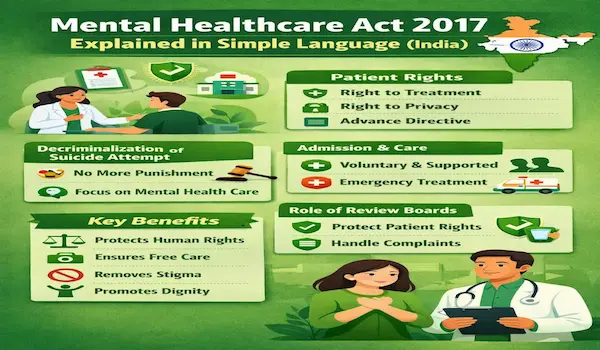
Mental health is as important as physical health. In India, the Mental Healthcare Act 2017 was introduced to protect the rights of people with mental illness.
This law focuses on dignity, equality, and access to treatment. In this article, we explain the Mental Healthcare Act 2017 in very simple language for everyone.

What Is the Mental Healthcare Act 2017?
Meaning of the Act
The Mental Healthcare Act 2017 is an Indian law that protects the rights of people suffering from mental illness. It ensures proper care, treatment, and respect.
Why This Act Was Introduced
Earlier laws treated mental illness as a crime or weakness. This Act changed that thinking and recognized mental illness as a health condition that needs care and support.
Who Is Covered Under This Act?
People with Mental Illness
Any person diagnosed with conditions like depression, anxiety, bipolar disorder, or schizophrenia is protected under this law.
Caregivers and Families
The Act also guides families and caregivers on how treatment and admission should be handled legally.
Key Rights Under the Mental Healthcare Act 2017
Right to Access Mental Healthcare
Every person has the right to affordable and quality mental health services from government facilities.
Right to Dignity and Privacy
Patients must be treated with respect. Their medical information must be kept confidential.
Right to Free Treatment
People below the poverty line or without insurance are entitled to free mental health treatment in government hospitals.
Right to Make an Advance Directive
A person can decide in advance how they want to be treated during a mental health crisis.
Admission and Treatment Process Explained
Voluntary Admission
A person can voluntarily seek admission to a mental health facility for treatment.
Supported Admission
If a person is unable to make decisions, a nominated representative can assist in admission.
Emergency Treatment
Doctors can provide emergency treatment to prevent harm to the patient or others.
Role of Mental Health Review Boards
What Is a Mental Health Review Board?
These boards protect patient rights and review complaints related to mental healthcare.
When Can You Approach the Board?
Patients or families can approach the board if rights are violated or treatment is denied.
Decriminalization of Suicide Attempt
Old Law vs New Law
Earlier, attempting suicide was a criminal offense. The Mental Healthcare Act 2017 removed this punishment.
Current Approach
A suicide attempt is now seen as a mental health issue. The person must receive care, not punishment.
Responsibilities of Government
Availability of Services
The government must ensure mental health services are available at district and state levels.
Awareness and Training
Authorities must promote mental health awareness and train healthcare professionals regularly.
Key Benefits of the Mental Healthcare Act 2017
- Protects human rights of mentally ill persons
- Ensures affordable and accessible treatment
- Removes stigma and criminalization
- Encourages early mental health support
- Strengthens accountability in healthcare
Importance of Mental Health Awareness
Social Impact
Mental health awareness reduces stigma and helps people seek help without fear.
Read more about World Mental Health Day and self-care tips to understand its global importance.
Physical and Mental Balance
Mental and physical health are connected. Regular exercise also supports mental well-being.
Read more about physical fitness and exercise benefits for overall health balance.
Frequently Asked Questions (FAQ)
Is the Mental Healthcare Act 2017 applicable all over India?
Yes, it applies across all states and union territories in India.
Can a patient refuse treatment?
Yes, unless emergency treatment is required to prevent serious harm.
Is mental illness treated like physical illness under this law?
Yes, the Act ensures equal importance to mental and physical health.
Who can complain if rights are violated?
Patients, caregivers, or nominated representatives can file complaints with review boards.
Conclusion
The Mental Healthcare Act 2017 is a major step towards a more compassionate and inclusive society. It treats mental illness as a health issue, not a crime.
By protecting rights and improving access to care, this law encourages people to seek help early and live with dignity and respect.
Understanding this Act helps individuals, families, and communities support mental well-being better.


