Sleep Anxiety: Causes, Symptoms, and Proven Solutions
Sleep Anxiety
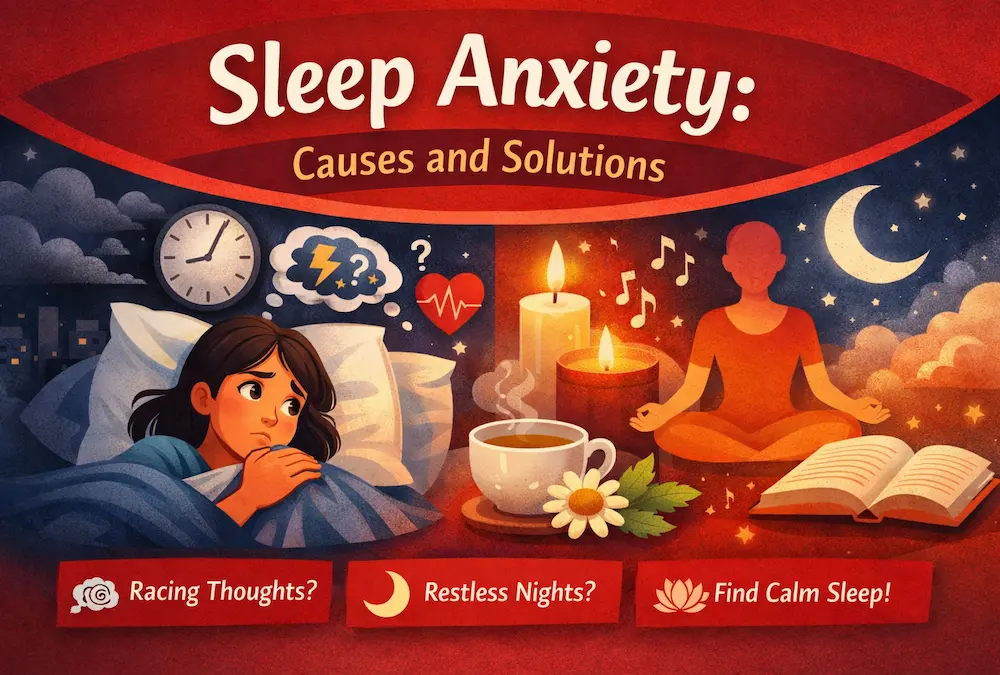
Sleep anxiety is a growing problem in today’s fast-paced world. Many people feel physically tired but mentally alert when they lie down at night. Instead of resting, the mind starts racing with worries, fears, and “what-if” thoughts.
Over time, this cycle can damage both sleep quality and mental health. Understanding sleep anxiety is the first step toward breaking this pattern and restoring peaceful sleep.
What Is Sleep Anxiety?
Understanding the Condition
Sleep anxiety refers to fear, stress, or excessive worry that appears around bedtime or during the night. It can make falling asleep difficult and may cause frequent awakenings.
Some people feel anxious about sleep itself, while others carry daytime stress into the night. Both forms can deeply affect rest and recovery.
How It Feels
- Racing thoughts when lying down
- Fast heartbeat or shallow breathing
- Fear of not sleeping enough
- Waking up suddenly with anxiety
Common Causes of Sleep Anxiety
Overthinking and Mental Stress
The mind often becomes louder at night because distractions disappear. Work pressure, relationship issues, or financial worries can surface when everything else goes quiet.
Irregular Sleep Habits
Going to bed at different times, excessive screen use, or sleeping late on weekends can confuse the body’s internal clock and trigger anxiety.
Health and Anxiety Disorders
Conditions such as generalized anxiety disorder, panic disorder, or chronic stress are closely linked to sleep anxiety.
Read more about anxiety symptoms and natural ways to manage it to understand the broader connection.
Stimulants and Lifestyle Factors
- Late-night caffeine or nicotine
- Heavy meals before bed
- Constant phone or social media use
How Sleep Anxiety Affects the Body
Physical Impact
Lack of quality sleep weakens the immune system and increases fatigue. Over time, it may contribute to headaches, digestive issues, and muscle tension.
Mental and Emotional Effects
Poor sleep can worsen anxiety, reduce focus, and lower emotional balance. This creates a feedback loop where anxiety and sleep problems reinforce each other.
Solutions for Managing Sleep Anxiety
1. Create a Calm Night Routine
- Set a fixed bedtime and wake-up time
- Dim lights at least one hour before sleep
- Practice calming activities like reading or stretching
2. Reduce Mental Noise
Writing down worries before bed can help clear the mind. This simple habit signals the brain that problems are acknowledged and can be addressed later.
3. Control Breathing and Relaxation
- Slow breathing (4–6 breaths per minute)
- Progressive muscle relaxation
- Mindfulness or body scan techniques
4. Improve Sleep Environment
A clean, dark, and quiet bedroom supports relaxation. Comfortable bedding and cooler temperatures also help the body prepare for rest.
5. Limit Stimulants
Avoid caffeine after mid-afternoon and reduce screen exposure before bed. Blue light can delay melatonin release and increase alertness.
Key Benefits
Better Sleep Quality
Managing sleep anxiety helps the body enter deeper sleep stages, improving energy and recovery.
Reduced Anxiety Levels
Quality sleep strengthens emotional regulation and lowers overall stress.
Improved Daily Performance
With better rest, focus, mood, and productivity naturally improve.
Frequently Asked Questions (FAQ)
Is sleep anxiety a medical condition?
Sleep anxiety is not always a diagnosis on its own. It often appears as a symptom of stress or anxiety disorders.
Can sleep anxiety go away on its own?
Mild cases may improve with lifestyle changes. Persistent anxiety may need professional support.
Should I take sleeping pills?
Medication should only be used under medical guidance. Long-term relief usually comes from addressing the root cause.
How long does it take to recover?
Improvement can begin within weeks when healthy sleep habits are consistently followed.
Conclusion
Small Steps Make a Big Difference
Sleep anxiety can feel overwhelming, but it is manageable. Simple changes in routine, mindset, and environment can bring noticeable improvement.
Focus on progress rather than perfection. With patience and consistency, restful sleep can return and anxiety can lose its hold over the night.


