Digital Detox: Why Your Brain Needs a Break from Screens
Digital Detox
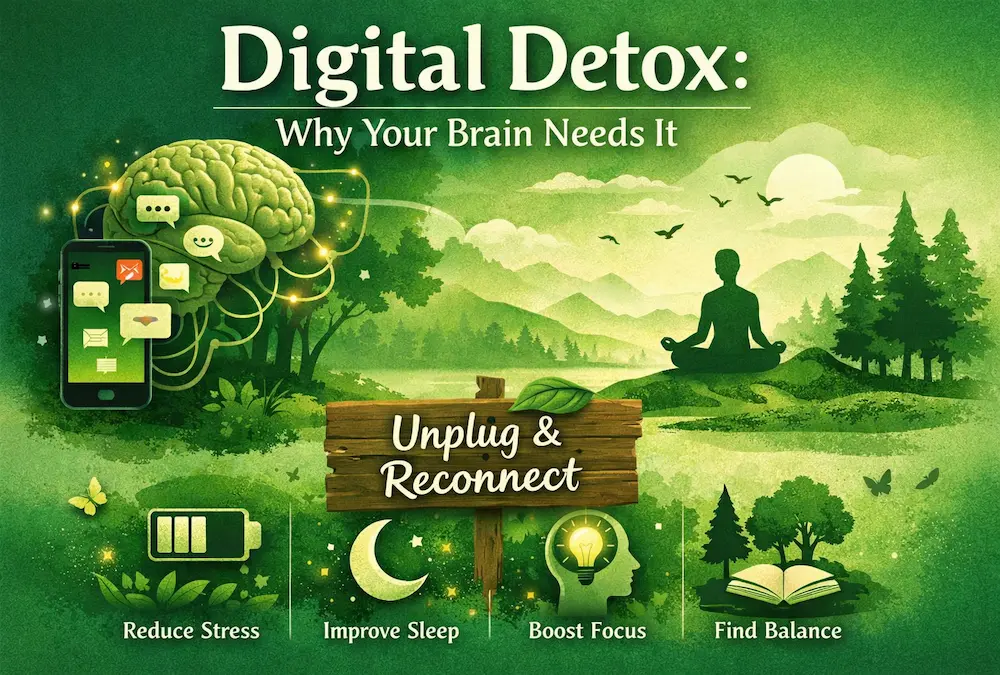
We live in a world where screens never sleep. Phones, laptops, tablets, and TVs compete for our attention from morning till night.
While technology makes life easier, constant digital exposure silently exhausts the brain. Over time, it reduces focus, increases stress, and disrupts emotional balance.
A digital detox is not about quitting technology forever. It is about creating healthy distance so your brain can rest, reset, and recover.
Understanding Digital Overload
What Is Digital Overload?
Digital overload happens when your brain processes more online information than it can comfortably handle. Notifications, scrolling, and multitasking push the brain into a constant state of alert.
This overload prevents deep thinking and keeps the nervous system under pressure.
How Screens Affect Brain Chemistry
Every like, message, or notification releases dopamine. This chemical rewards short-term pleasure but weakens long-term attention.
Over time, your brain starts craving constant stimulation, making offline tasks feel boring or tiring.
Signs You Need a Digital Detox
- Difficulty concentrating
- Constant urge to check your phone
- Poor sleep quality
- Feeling mentally drained
- Increased anxiety or irritability
Why Your Brain Needs a Digital Detox
Restores Mental Clarity
Without continuous digital noise, the brain regains its natural rhythm. Thoughts become clearer, and decision-making improves.
Many people notice sharper focus within days of reducing screen time.
Reduces Stress and Anxiety
Constant updates, news, and social comparison overload emotional centers in the brain.
A detox lowers cortisol levels, helping you feel calmer and more grounded.
Improves Sleep Quality
Blue light from screens interferes with melatonin, the sleep hormone.
Reducing screen use before bed allows deeper, more restorative sleep.
Strengthens Memory and Learning
Multitasking weakens memory formation. Digital detox encourages single-task focus, which helps information stick longer.
Key Benefits of a Digital Detox
Better Focus and Productivity
- Longer attention span
- Faster task completion
- Improved problem-solving
Emotional Balance
Less screen time reduces emotional triggers from social media and news overload.
This helps stabilize mood and increase emotional awareness.
Stronger Real-Life Connections
Digital detox creates space for meaningful conversations and deeper relationships.
Face-to-face interaction strengthens empathy and trust.
Improved Physical Health
- Reduced eye strain
- Less neck and back pain
- More physical movement
How to Start a Digital Detox
Step 1: Set Clear Boundaries
- Define screen-free hours
- Turn off non-essential notifications
- Keep phones out of the bedroom
Step 2: Replace Screen Time With Offline Activities
Your brain needs healthy alternatives, not empty gaps.
- Reading physical books
- Walking or stretching
- Journaling thoughts
- Meditation or breathing exercises
Step 3: Practice Mindful Technology Use
Use technology with intention, not habit.
Ask yourself why you are opening an app before doing so.
Step 4: Try a Weekly Mini Detox
Choose one day a week to reduce screen usage significantly.
Even short breaks bring noticeable mental relief.
Digital Detox and Long-Term Brain Health
Supports Cognitive Longevity
Regular detox periods protect memory and attention as you age.
They allow neural pathways to strengthen naturally.
Prevents Burnout
Mental burnout often starts with information overload.
Digital detox acts as preventive mental care.
Encourages Self-Awareness
Silence helps you notice thoughts, emotions, and habits clearly.
This awareness improves emotional intelligence.
FAQ
How long should a digital detox last?
It can last from a few hours daily to a full weekend. Consistency matters more than duration.
Is digital detox realistic for working professionals?
Yes. It focuses on reducing unnecessary use, not work-related tools.
Will I miss important updates?
Most updates are not urgent. Important messages will find other ways to reach you.
Can digital detox improve mental health?
Yes. Research shows reduced anxiety, better mood, and improved focus.
Conclusion
A digital detox is not about rejecting technology. It is about protecting your brain from constant overload.
By creating healthy boundaries, you allow your mind to rest, reset, and thrive. Small changes today can lead to long-term mental clarity and emotional balance.
If you are interested in broader well-being and access to supportive health systems, Read more about accessible healthcare services and support systems .
Your brain deserves moments of silence. Give it the break it needs.


